

Tropical Modernism: Designing Climate-Responsive Interiors for Sri Lankan Homes
Discover how to pair timeless tropical modernism with warm minimalism to create cool, breathable, and elegant living spaces tailored for Sri Lanka’s climate.
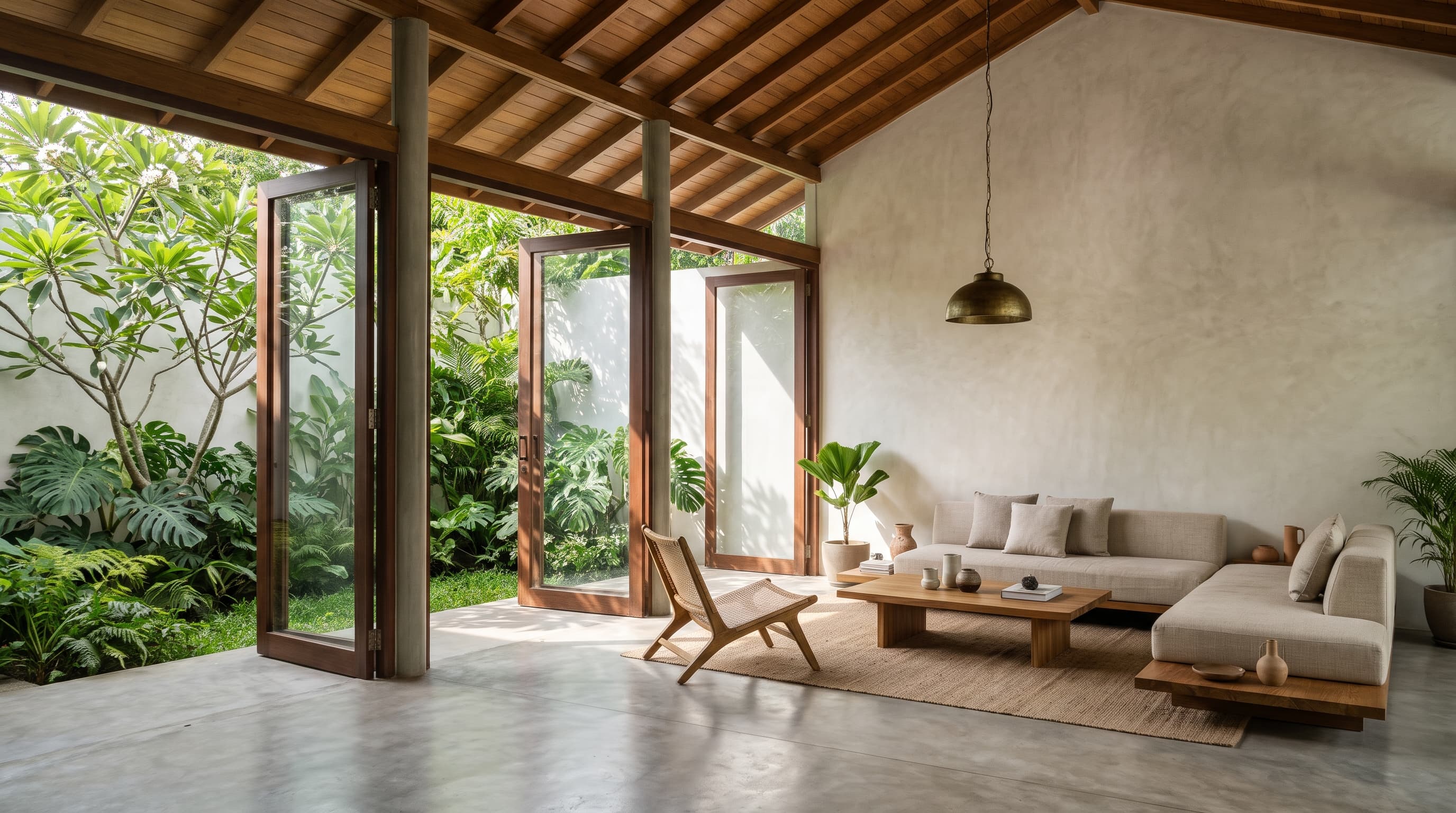
Tropical Modernism: Designing Climate-Responsive Interiors for Sri Lankan Homes
Sri Lanka’s architectural heritage is globally celebrated for pioneering Tropical Modernism - a design movement immortalized by Geoffrey Bawa and Minnette de Silva that seamlessly merges modernist geometry with local ecology.
Yet today, many homeowners unintentionally import Western interior trends that clash with our equatorial environment: fully enclosed airtight rooms, synthetic fabrics that trap humidity, and heavy dark finishes that absorb tropical heat.
Designing a home in Colombo, Kandy, or the southern coastal belt requires a different mindset. True luxury in our climate is not about running air conditioners around the clock; it is about spatial lightness, natural ventilation, tactile materiality, and unforced indoor-outdoor harmony.
Here is how you can introduce refined, climate-responsive tropical modernism into your home.
1. Passive Cooling and the Art of Air Movement
In a tropical climate, air stagnation leads to discomfort and humidity buildup. Before selecting furniture or decorative pieces, an interior architect considers how breezes flow through the floor plan.
Internal Courtyards and Lightwells
Incorporating an internal open-to-sky courtyard (meda midula) or a vertical lightwell does more than introduce sunlight; it functions as a natural thermal chimney. Warm air rises and escapes through high ventilation louvres, drawing cooler air through shaded ground-level windows.
Operable Timber Louvres and Slatted Screens
Replace solid partitions with slatted timber screens (jali inspired) or pivot louvres made from locally sourced hardwoods. These screens break strong afternoon monsoonal winds into gentle breezes, filter blinding glare, and preserve acoustic privacy between living zones without halting air circulation.
2. Choosing Materials That Breathe in High Humidity
Tropical interiors require materials that age gracefully with temperature shifts, monsoons, and high ambient moisture.
Porous Mineral Walls: Instead of glossy synthetic emulsion paints that trap moisture, opt for breathable lime-wash finishes, micro-cement, or honed local granite. Lime plaster naturally regulates ambient humidity, inhibits mould growth, and casts a soft, non-reflective matte glow.
Sustainable Native Hardwoods: Sri Lankan timbers such as Teak, Kumbuk, and Nadun bring warm amber and rich caramel tones into minimalist interiors. When properly seasoned and finished with natural matte oils rather than heavy plastic varnishes, these hardwoods resist warping while keeping surfaces cool to the touch.
Woven Natural Fibres: Cane (veywal), hand-loomed Sri Lankan cottons, raw linen, and rush mats introduce crucial tactile layers. These open-weave materials stay cool against bare skin and soften acoustic reverberation in high-ceilinged spaces.
3. Shaded Thresholds: The Verandah Reimagined
The traditional Sri Lankan verandah (pila) was the social heart of the house - a shaded transitional room between private interiors and lush gardens.
In contemporary villa and suburban home design, wide cantilevered eaves and deep covered terraces protect large sliding glass panels from direct tropical solar heat gain. By keeping floor materials consistent from the living lounge out onto the patio—such as honed grey terrazzo or seamless concrete screed—the eye perceives the garden as a direct extension of the room.
4. Layered Architectural Lighting for Warm Evenings
Tropical sunlight is intense during the day, which makes the evening transition particularly important. Avoid harsh overhead white downlights (4000K–6500K), which flatten spatial depth and create uncomfortable glare.
Instead, curate a layered lighting scheme using 2700K to 3000K warm illumination:
Low-Level Floor Washes: Concealed LED coves that skim across textured stone floors.
Feature Uplighting: Low-voltage garden spotlights illuminating architectural frangipani or palm fronds outside glass doors.
Accent Pendants: Handcrafted brass or terracotta pendant lamps suspended low over dining tables, creating intimate pools of light for gathering.
Conclusion: Crafting Spaces of Enduring Restraint
Tropical modernism is not a fleeting aesthetic; it is an enduring philosophy grounded in balance, climate respect, and mindful restraint. By prioritizing airflow, celebrating native craftsmanship, and framing nature as an architectural element, your home becomes a restorative sanctuary that stays cool, elegant, and timeless throughout every season.
Planning to Build or Renovate Your Residence in Sri Lanka?
Speak with the SeniRuu Studio team to create a climate-responsive interior with natural cross-ventilation, native hardwoods, and seamless indoor-outdoor living tailored to your lifestyle.